Buffett Steps Down as Chairman: What's Next for Berkshire?
The Oracle Steps Aside: Buffett Relinquishes Chairman Role
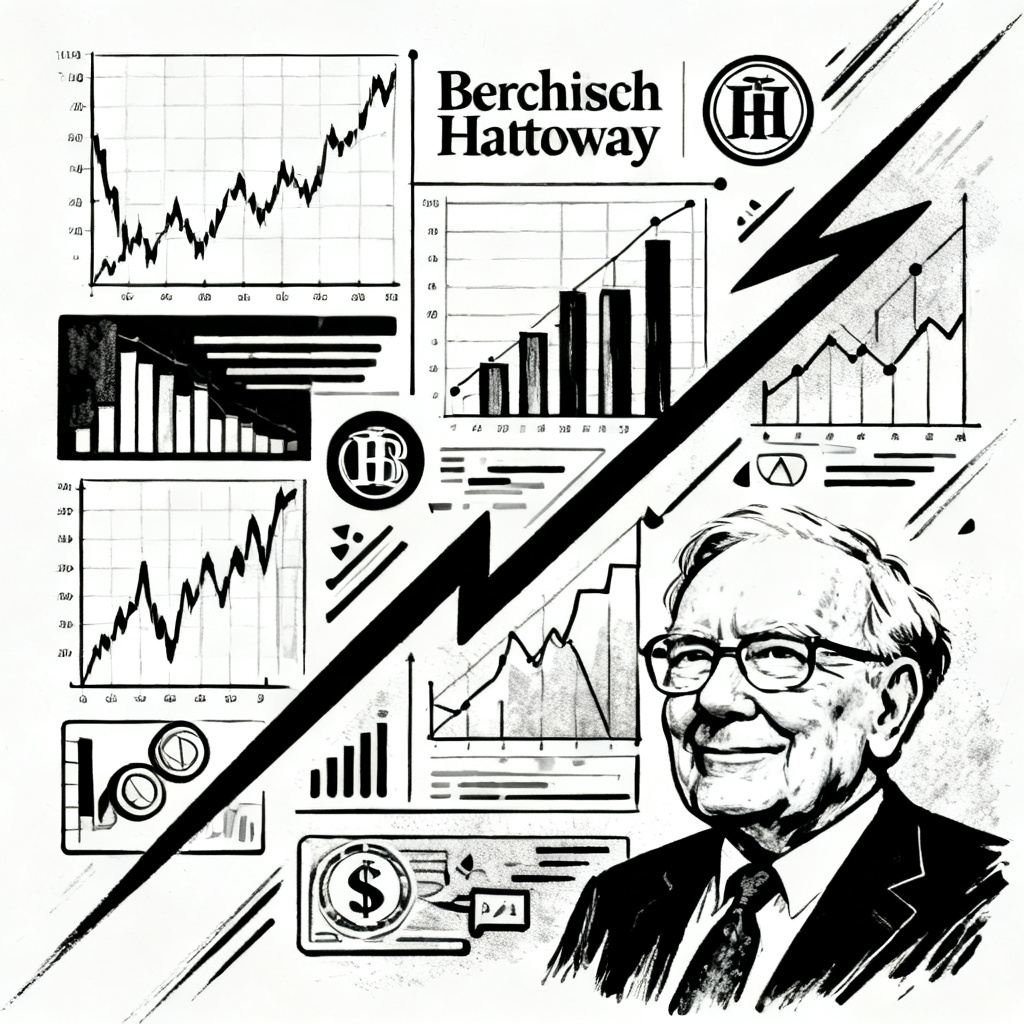
Father Time remains undefeated. In a move long anticipated yet still seismic, Warren Buffett has officially stepped down as Chairman of Berkshire Hathaway BRK.B. The 96-year-old investing legend will assume the title of Chairman Emeritus, capping a remarkable 59-year run at the helm of the $1 trillion conglomerate.
His son, Howard Buffett, will take over as non-executive Chairman, while Susan Decker continues as lead independent director. CEO Greg Abel, who took over that role last year, remains firmly in charge of operations. “Greg runs the company; Howard will guard its culture and values – both worth more than anything on our balance sheet,” Buffett wrote.
So, what changes? For traders, the headline is simple: the Buffett premium—that intangible glow of having the world’s greatest capital allocator at the controls—diminishes one more notch. The market’s job is now to price a Berkshire run solely by Abel.
The Succession Blueprint: A "Policy" in Place
Buffett’s letter framed the transition with characteristic clarity. He described Howard’s role as a guardian of culture, a “policy the shareholders own and hope never to claim against.” It’s a clever analogy. The chairman’s role is now explicitly about preserving the Berkshire ethos: decentralization, thrift, rational capital allocation, and that famous long-term horizon.
This formalizes a structure that’s been in place for over a year. Abel is the operator and capital deployer. Howard is the cultural watchdog. The board, with Decker’s strengthened independent role, provides oversight. It’s a deliberate dismantling of the one-man-show model.
The question for investors: Is this robust corporate governance, or a committee-ization of the singular genius that built Berkshire? The market has been voting with a degree of skepticism.
The 2026 Slump: Pressure Mounts on Abel
Let’s talk performance. Berkshire shares are up a mere 1% in 2026, drastically underperforming the S&P 500’s 11%+ rally. Some context is fair: rising oil prices have hit its energy-heavy industrial portfolio, and the “Magnificent Seven”-driven market has little love for value-oriented stalwarts.
But let’s be direct: this underperformance raises the stakes for Abel. Shareholders aren’t just waiting for him to steward the ship; they’re waiting for him to drive it. Can he allocate Berkshire’s massive capital with the same legendary touch? The $365.5 billion cash pile is both a weapon and a taunt.
Abel has started to answer. He stepped up share buybacks to $4.5 billion in Q2—a tangible, confidence-building move. But the real test will be the next major acquisition or equity stake. His recent revelation that Buffett spearheaded the $10 billion Alphabet GOOGL purchase is telling. The market wants to see Abel’s own billion-dollar swing.
The Abel Era: Can He Deploy the Mountain of Cash?
Greg Abel now faces the most enviable and daunting task in finance: putting $365 billion to work in a frothy market. Buffett’s genius wasn’t just picking stocks; it was having the patience and nerve to write colossal checks during crises when others were paralyzed.
Abel’s playbook is likely different. His background at Berkshire Energy suggests a comfort with complex, regulated infrastructure deals—a space where Berkshire’s permanent capital is a supreme advantage. Will the next big move be a utility, a pipeline, or something entirely unexpected?
The elephant in the room remains tech. With Apple AAPL as its largest holding and the new Alphabet stake, Berkshire is already a tech giant. Does Abel lean in or pull back? His capital allocation decisions over the next 12-18 months will define his tenure and finally give the market a true read on “Berkshire 2.0.”
Buffett's Legacy: The Numbers Don't Lie
As Buffett transitions to emeritus status, the scale of his achievement is almost incomprehensible. A 19.7% compounded annual return over nearly six decades, nearly doubling the S&P 500. He transformed a failing textile mill into a behemoth with $44.5 billion in operating earnings and a portfolio of iconic American brands.
But perhaps his ultimate gift to shareholders is the succession plan itself. The hand-off to Abel last year, and now this structured transition at the board level, was meticulously planned. It avoids the chaotic leadership battles that plague most founder-led empires.
Buffett’s closing note was pure class: “The company is in excellent hands, and I look forward to remaining a shareholder alongside you.” He’s putting his money—and his legacy—squarely behind the new team.