Butterfly Strategy: Pinning the Perfect Strike with VWAP & Volume
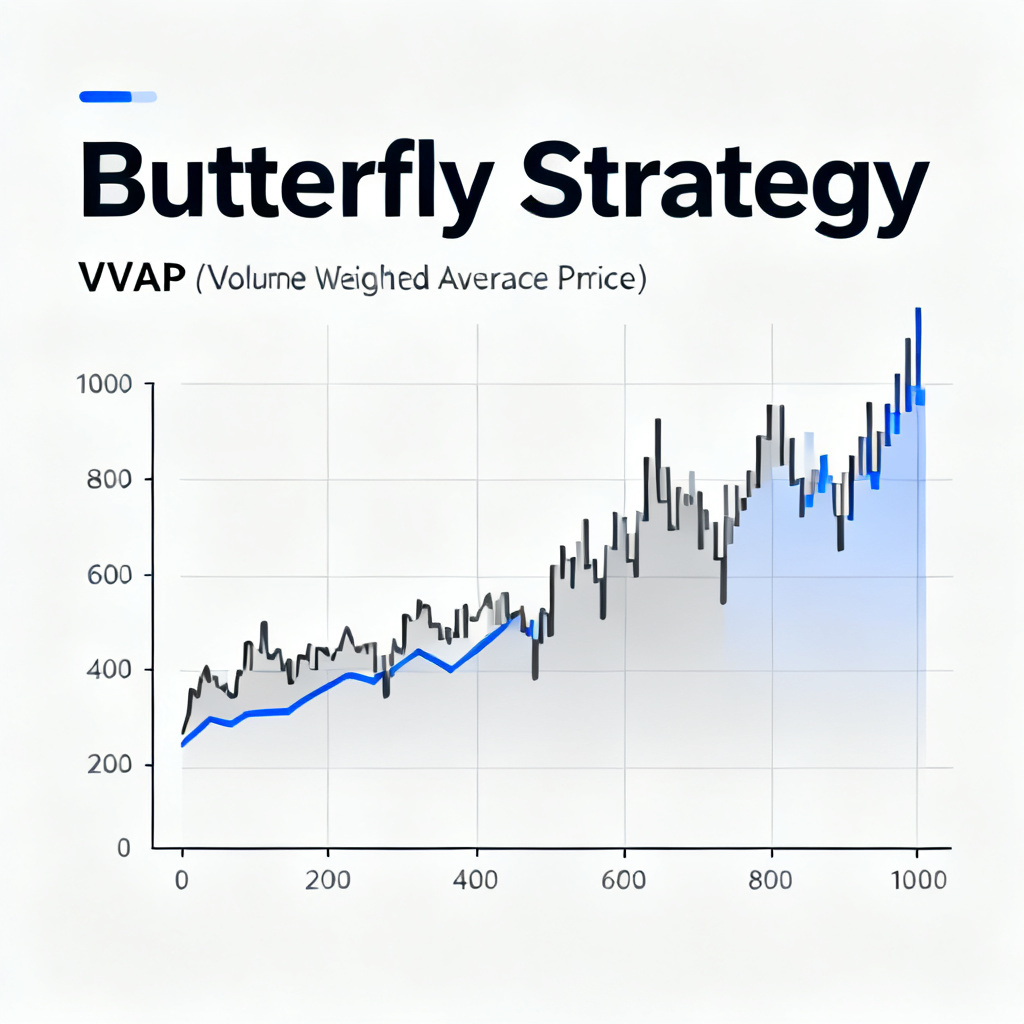
Butterfly Strategy: The Art of Pinpoint Precision
In the world of options trading, the butterfly strategy stands out as a masterpiece of defined-risk, non-directional positioning. Whether you're deploying an iron butterfly or a traditional butterfly spread, the core challenge remains the same: selecting the perfect central strike price. Getting this wrong can turn a promising, low-cost trade into a frustrating exercise in breakeven management. Today, we’re merging a classic technical analysis duo—VWAP and Volume—with the elegance of the butterfly to create a robust, objective framework for strike selection.
Why the Butterfly? Defined Risk on a Budget
For traders familiar with credit put spreads, the butterfly is a logical evolution. While a put spread profits from a directional move or time decay in one direction, a butterfly is designed to profit from a lack of movement. An iron butterfly, in particular, is a popular choice. It combines a bear call spread and a bull put spread, all centered around the same strike, for a net credit. The maximum profit is achieved if the underlying asset closes exactly at that central strike at expiration. The risk is strictly limited to the difference between strikes minus the credit received, making it a "sleep at night" trade. The low capital requirement and high potential return-on-risk make it a compelling strategy when you anticipate low volatility or a pin to a specific price.
The Heart of the Trade: Choosing the "Body" Strike
This is where most butterfly trades succeed or fail. The central, or "body," strike of your butterfly is the fulcrum of the entire position. Selecting it based on a round number or a gut feeling is a recipe for disappointment. We need objective, market-driven data. This is where VWAP (Volume-Weighted Average Price) and volume profile analysis come into play.
VWAP isn't just an institutional benchmark; it’s a powerful magnet for price action. It represents the average price a stock has traded at throughout the day, weighted by volume. Assets often oscillate around VWAP, and it frequently acts as a support/resistance pivot. For a butterfly trader, a VWAP that is flat and coinciding with a high-volume node suggests a strong consensus price—a prime candidate for your central strike.
VWAP and Volume: Your Objective Strike Selection Tool
Let's break down the practical application. You're looking at stock XYZ, trading at $100.50. You expect it to remain range-bound for the next 30 days until earnings.
Step 1: Analyze the Intraday and Multi-Day VWAP
First, plot the VWAP on a 1-day and a 5-day chart. Is the price respecting the VWAP line? On the 1-day chart, if XYZ has spent most of the session rotating around $100.75, that VWAP level is significant. Check the 5-day VWAP. If it's also converging near $101, you have a strong, multi-timeframe reference point. This convergence indicates a persistent fair price agreed upon by the market.
Step 2: Layer in Volume Profile (Volume-by-Price)
Next, examine the volume profile for the past several sessions. Look for the Point of Control (POC)—the price level with the highest traded volume. This is where the most business has been done. The ideal scenario for a butterfly is when the 1-day VWAP, the 5-day VWAP, and the session's POC are all clustered within a very tight range, say between $100.50 and $101. This cluster represents a massive volume of consensus. The market is literally screaming, "This is fair value right here." Placing your butterfly's body at, for example, the $101 strike aligns your trade with the market's most powerful gravitational point.
Practical Example: Building an Iron Butterfly with Data
Let’s construct a hypothetical trade based on our analysis. Stock XYZ is at $100.50. Our VWAP/Volume cluster is at $101.
- Expiration: 30 days out.
- Central Strike (Body): $101 (aligning with VWAP/POC).
- Wings: We'll use $5 wings for a wide, forgiving profit zone.
We sell the iron butterfly for a credit:
- Sell 1 $101 Call
- Buy 1 $106 Call (call wing)
- Sell 1 $101 Put
- Buy 1 $96 Put (put wing)
Assume we collect a net premium of $2.50 per share ($250 per spread). Our maximum risk is the width of the wing ($5) minus the credit ($2.50) = $2.50 ($250). Our breakeven points are the central strike plus/minus the credit: $98.50 and $103.50. The stock can move $2.50 in either direction before we start to lose money. By centering at the VWAP/Volume cluster, we have statistically placed our highest probability of profit zone where the stock "wants" to trade.
Risk Management and Adjustment Mindset
While the butterfly is defined risk, management is key. If the underlying starts to drift toward one breakeven point early in the trade, you might consider an adjustment like "legging" into an unbalanced butterfly or rolling the entire position. However, by using VWAP as a dynamic guide, you have a real-time tool. If the stock breaks and holds decisively above or below the VWAP with increasing volume, it signals the consensus is breaking. This is your early warning to consider managing or exiting the trade before expiration pressure mounts.
Conclusion: From Guesswork to Calculated Placement
The butterfly strategy, especially the iron butterfly, transforms from an abstract concept into a precision instrument when you anchor it with objective data. By using VWAP to identify the market's accepted average price and volume profile to locate its highest-conviction zone, you move your strike selection from guesswork to calculated placement. This methodology aligns your limited-risk, high-probability trade structure with the market's own gravitational centers, giving you the confidence to deploy these elegant spreads as a core part of your options trading arsenal. Start by analyzing the VWAP and volume on your favorite range-bound stocks—you might just find the perfect setup for your next butterfly.