Call Spread Strategy: Bull Calls at Support Retests
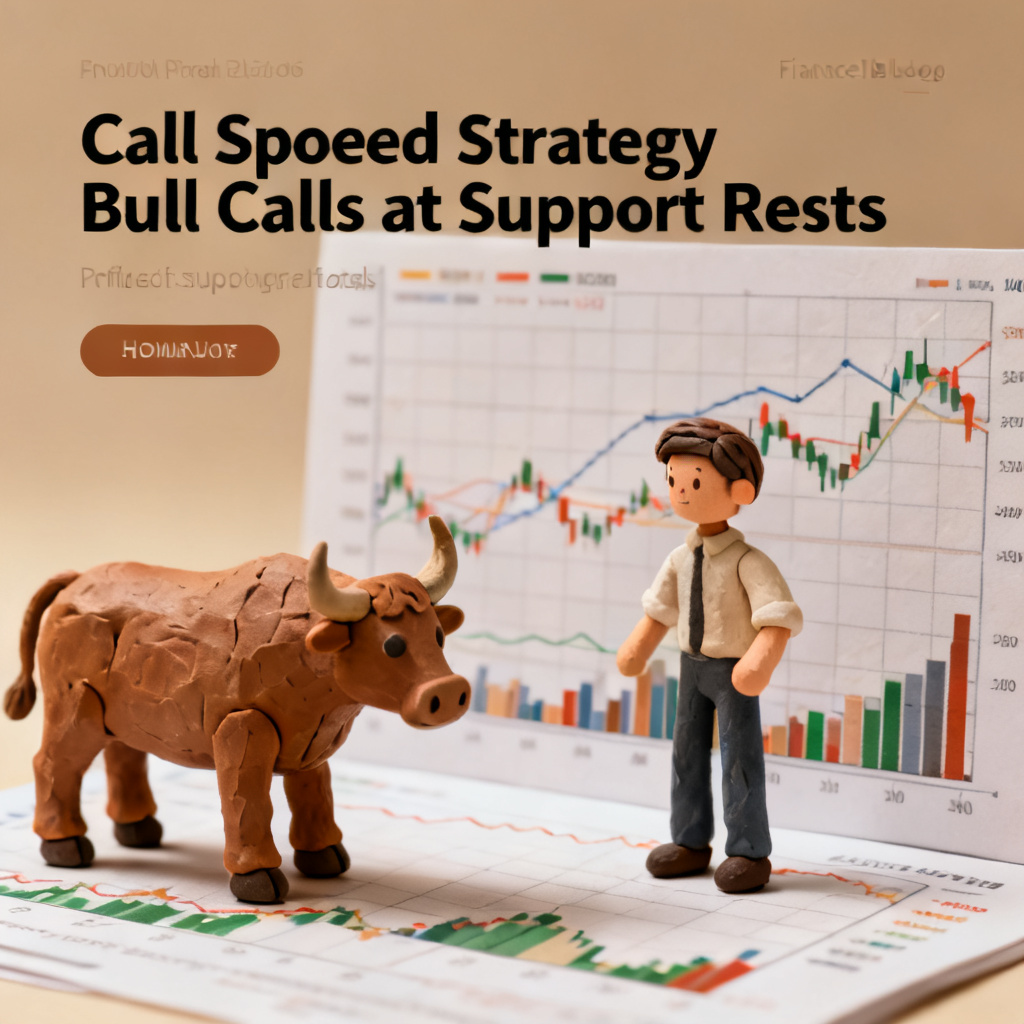
Call Spread Strategy: Anchor Bull Calls to Support Retests and Resistance Flips
A call spread strategy becomes much more reliable when it is tied to structure rather than hope. Instead of buying a long call just because a chart looks bullish, a bull call spread can be anchored to a support retest, a failed breakdown, or a resistance level that has flipped into support. This gives the position a clear reason to exist, a defined risk, and a practical plan for taking profits or exiting if the technical story fails.
At Credit Put Spread Garage, the same discipline used in selling premium can be applied to debit spreads. Whether the goal is to collect credit with a bear call spread or to pay a smaller debit for upside exposure, options trades should start with a level that the market has already tested. A support retest or resistance flip helps answer the most important question: where does this trade stop making sense?
Why Call Spreads Fit Structure Better Than Naked Long Calls
A bull call spread is a debit call spread. You buy a lower strike call and sell a higher strike call with the same expiration. The sold call reduces cost, lowers break-even, and caps maximum profit. In return, the trader gets a cleaner risk profile and can trade a move that is strong enough to work, without paying for unlimited upside that rarely arrives.
That is why spreads fit technical levels. A support retest creates a bounded expected move: price holds, then challenges next resistance. A resistance flip does the same: an old ceiling becomes a floor, and the market needs confirmation. A call spread can be sized for that expected move rather than a speculative moonshot.
Define the Spread Before Choosing Strikes
Before selecting strikes, define the technical zone. If a stock held a prior support band, retested it, then rose, the bull thesis may only need price to move toward the next resistance band. That helps place the short strike. If the short strike is below the objective, profit is given up too early. If it is far above, the spread is more expensive and odds may decline.
A practical rule is to buy the long call near at-the-money or slightly out-of-the-money, and sell the short call at expected resistance or measured move target. The spread cost should reflect probability, not excitement.
Using Support Retests as Entry Anchors
A support retest is one of the best anchors for a debit call spread. The first touch of support may be noisy, but a retest shows that buyers have had time to return. It gives the trade a defined failure point: if price closes clearly below the support band, the setup is invalid.
For example, assume a stock breaks above a range, pulls back to the breakout level, holds, and rises. The trader can buy a call spread after confirmation, not on the first touch. If support is around $245 and resistance around $260, a call spread might buy the $248 call and sell the $260 call. The long call captures the move, while the short call reduces premium paid and aligns with the target.
Practical Support Retest Example
Suppose a stock closes at $251 after retesting $247 support. The trader buys a $250/$262 call spread expiring in 45 days for a net debit of $1.60. Maximum risk is $160 per contract. Maximum profit is $1,200 per contract if the stock finishes above $262, before commissions. If price breaks below $247 and stays there, the technical premise is gone, and the position should be managed or closed. The retest gives a reason for the trade and a reason to exit.
Resistance Flips Turn Ceilings Into Floors
Resistance flips are another powerful anchor for a call spread strategy. When a stock pushes through a well-tested resistance level, that level often becomes support on a retest. The market changes hands, short sellers cover, and buyers who missed the breakout wait for confirmation. A bull call spread placed after that flip can benefit from the new demand zone.
Consider a stock that rallies from $300 to $318, then pulls back to $312. If $312 holds and price turns higher, the trader may buy a $313/$325 call spread. The short call is near the next area where profit-taking is likely. The resistance flip tells the trader where the new floor is, and the old resistance tells the trader where upside may slow.
How to Manage the Position
Call spreads work best with simple management. One method is to take half off at one-half maximum profit and let the rest run to the short strike. Another method is to close when price approaches the short call if the technical target is reached. If the stock loses the support retest or fails at the old resistance, consider a smaller debit spread, a credit put spread, or no trade at all.
Bear Call Spreads: The Credit Side of the Same Logic
While bull call spreads pay a debit to bet on upside, bear call spreads are credit call spreads that collect premium when price is expected to stay below resistance. The same structure applies. If price fails to break a resistance flip, or tests support only to bounce into a range ceiling, a bear call spread can be sold. For example, if a stock rallies to $320 but stalls beneath resistance, a trader might sell the $322/$332 bear call spread. The long higher strike caps risk, and the credit defines maximum loss.
This is useful because it gives traders a way to express neutral or bearish views without buying puts. It also helps connect options mechanics to the same level discipline used by credit put spread traders. A support retest may lead to buying a bull call spread, while a failed resistance flip may lead to selling a bear call spread. The chart is not just a picture; it is a probability map.
Relating Call Spreads to Credit Put Spreads
Options pricing often makes bull call spreads and credit put spreads look similar in outcome. Both can benefit from price staying above a support area. The difference is exposure. A bull call spread caps upside and defines risk on the debit side. A credit put spread can collect premium and define risk on the credit side, but it usually carries a larger defined loss if the stock drops sharply. In practice, a trader can choose the structure that matches confidence and account rules.
Imagine a stock holding a $245 support retest. A bullish trader may buy a $248/$260 call spread, while a conservative income trader may sell a $235/$240 put spread. The support zone provides the entry logic in both cases. If support breaks, re-evaluate. If support holds and price climbs, the call spread captures more of the move, while the put spread may earn a quicker return on sideways drift.
Practical Checklist for a Call Spread Trade
Before placing a call spread, check the technical anchor. Was there a support retest, a resistance flip, or a failed breakdown? Is the short strike aligned with expected resistance? Does the debit paid justify the potential profit and probability of success? Would a bear call spread or credit put spread be more appropriate if confidence is lower?
A strong call spread strategy does not require predicting the exact top. It requires a plan. Anchor the position to levels the market already respects, define the maximum loss, choose strikes that match the expected move, and exit if the setup breaks. When bull calls are used this way, they become a disciplined trading tool instead of a one-way bet on momentum.