Credit vs. Debit Put Spread: Comparing Strategy Costs & Setups
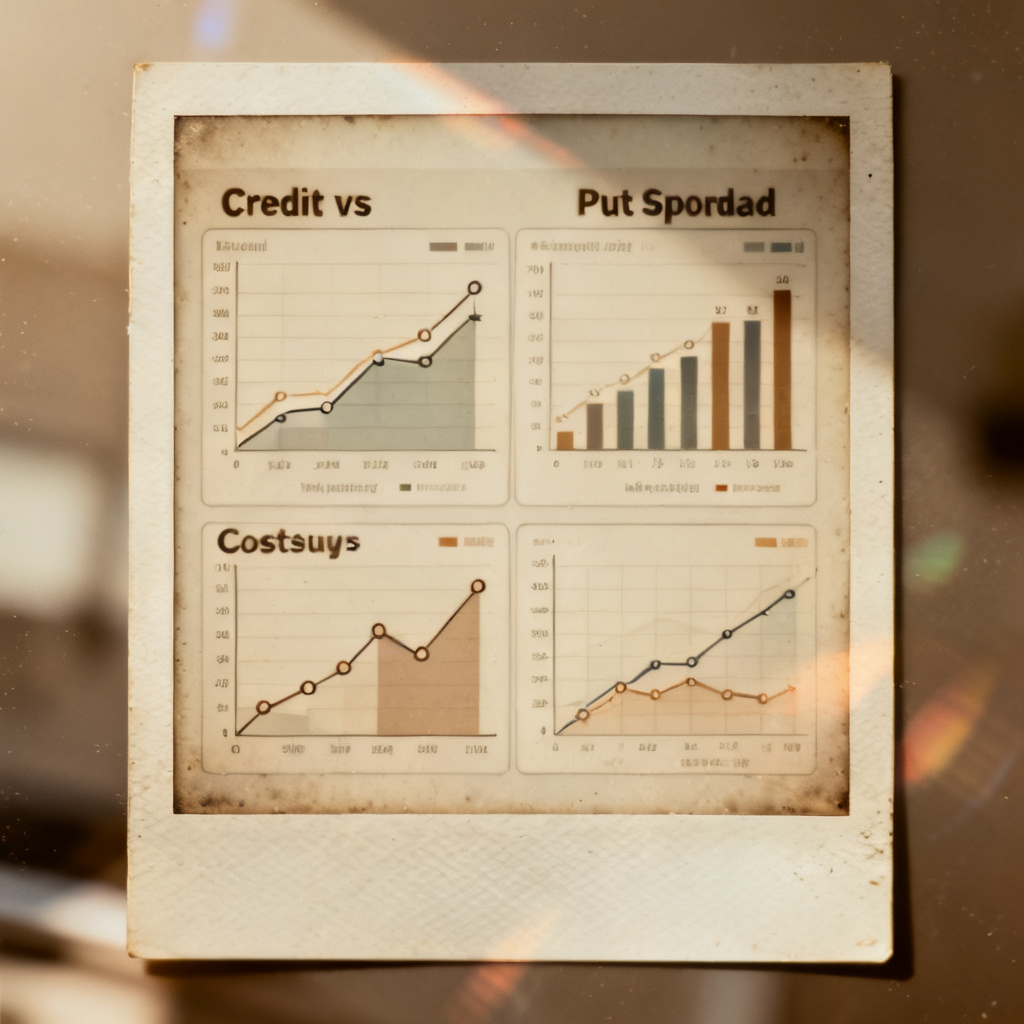
Credit vs. Debit Put Spread: A True Cost-Benefit Breakdown
In the world of defined-risk options strategies, vertical spreads are a trader's best friend. They allow you to express a directional opinion with limited capital at risk. But when it comes to put spreads, a crucial fork in the road appears: credit put spread vs. debit put spread. While they look similar on a risk graph, their mechanics, cost basis, and ideal market conditions are fundamentally different. This breakdown will dissect the true cost, benefit, and application of each, helping you choose the right tool for the trading job.
The Core Mechanics: How They're Built
First, let's define the structures. Both strategies involve buying one put option and selling another put option on the same underlying asset with the same expiration date, but with different strike prices.
The Credit Put Spread (Bull Put Spread)
This is a net credit strategy. You sell a higher-strike put and buy a lower-strike put. The premium received for the sold put is greater than the premium paid for the bought put, resulting in a net credit to your account upfront.
Example: Stock XYZ is trading at $105.
- Sell 1 XYZ 100-strike put for $3.00 ($300 credit)
- Buy 1 XYZ 95-strike put for $1.50 ($150 debit)
Net Credit: $3.00 - $1.50 = $1.50 ($150 per spread). This $150 is your maximum potential profit. Your obligation is to buy shares at $100 if assigned, but you are protected down to $95 by your long put.
The Debit Put Spread (Bear Put Spread)
This is a net debit strategy. You buy a higher-strike put and sell a lower-strike put. The premium paid for the bought put is greater than the premium received for the sold put, resulting in a net debit from your account.
Example: Stock XYZ is trading at $105.
- Buy 1 XYZ 100-strike put for $3.00 ($300 debit)
- Sell 1 XYZ 95-strike put for $1.50 ($150 credit)
Net Debit: $3.00 - $1.50 = $1.50 ($150 per spread). This $150 is your maximum potential risk (the amount you paid). Your maximum profit is the width of the spread minus the debit paid.
The True Cost-Benefit Comparison
The "cost" of a strategy isn't just the cash outlay; it's a combination of capital requirement, probability of profit, and breakeven analysis.
| Feature | Credit Put Spread (Bullish) | Debit Put Spread (Bearish) |
|---|---|---|
| Net Cash Flow | Credit Received Upfront | Debit Paid Upfront |
| Max Profit | Limited to the Credit Received | Limited to (Spread Width - Debit Paid) |
| Max Risk | Limited to (Spread Width - Credit Received) | Limited to the Debit Paid |
| Breakeven Point | Short Strike Price - Net Credit | Long Strike Price - Net Debit |
| Defining "Cost" | Cost is the collateral required (the max risk). Your account gets paid to take on the risk. | Cost is the capital expended (the debit). You pay for the right to bearish exposure. |
When to Use a Credit Put Spread
The credit put spread is a quintessential "get paid to wait" strategy. It excels in specific, high-probability scenarios.
- Bullish to Neutral-Bias: You believe the stock will stay above your short strike. You don't need a big rally; you just need it not to fall too much.
- High Implied Volatility (IV) Environments: When option premiums are inflated (e.g., after earnings, during market fear), selling premium is attractive. The credit is larger, and you benefit from a potential drop in IV (vega).
- Generating Income: The upfront credit provides immediate positive cash flow. This is a core strategy for generating consistent returns in a sideways or gently rising market.
- Defined-Risk Alternative to Cash-Secured Puts: It requires significantly less buying power than a cash-secured put while capping your maximum loss.
Risk to Manage: Your profit zone is above the breakeven. A sharp drop below your long put strike locks in your max loss. Assignment on the short put is possible if the stock closes below the strike at expiration.
When to Use a Debit Put Spread
The debit put spread is a directional, "pay for leverage" strategy for bearish moves.
- Bearish Bias with a Target: You are actively predicting a decline in the underlying, but not a crash. The long put gives you downside exposure, while the short put lowers your cost basis by defining the maximum profit zone.
- Lower Implied Volatility (IV) Environments: Buying options is cheaper when IV is low. Your debit is lower, and you can benefit from an increase in IV (positive vega).
- Leveraging Capital: For the cost of the debit, you control the risk equivalent of the entire spread width. It's a cost-effective way to bet on a down move without the unlimited risk of shorting stock.
- Playing a Downside Breakdown: Ideal for when a stock breaks below key technical support. You define your risk precisely in a volatile situation.
Risk to Manage: Your profit zone is below the breakeven. If the stock stays flat or rises, you lose the entire debit paid. Time decay (theta) is your enemy, eroding the value of your long option.
The Probability & Psychology Factor
This is a critical differentiator. A standard 30-delta credit put spread typically has a higher probability of profit (POP) at expiration than a similar 30-delta debit put spread. Why? The credit spread profits if the stock does nothing or goes up. The debit spread needs the stock to move in its direction to profit. The market pays you a credit to take the statistically higher-probability trade (bullish drift, time decay). You pay a debit to take the lower-probability, higher-payout directional bet.
Psychologically, the credit spread offers immediate gratification (a cash deposit) but requires you to manage a position that is profitable from day one. The debit spread starts "in the red" and requires patience for the thesis to play out.
Key Decision Checklist
Before you place the trade, ask:
- What's my directional view? Bullish/Neutral = Credit Spread. Bearish = Debit Spread.
- What's the IV landscape? High IV favors selling (credit). Low IV favors buying (debit).
- What's my primary goal? Income/Probability = Credit. Leveraged Directional Play = Debit.
- What's my risk capital? For a credit spread, ensure you can cover the max loss collateral. For a debit spread, be comfortable losing the entire premium paid.
Final Verdict: Complementary Tools, Not Competitors
The credit put spread and debit put spread are not rivals; they are specialized tools for different market forecasts and conditions. The credit spread is a premium-selling, high-probability workhorse for steady markets. The debit spread is a tactical, lower-probability weapon for capitalizing on predicted declines. The true "cost" is not just dollars but also the opportunity cost of being on the wrong side of time decay and market movement. By understanding their intrinsic cost-benefit structures, you can strategically choose the spread that aligns with your market outlook, volatility assessment, and profit objectives, turning a simple two-legged trade into a precision instrument.