Ford Fends Off Hyundai in Tight U.S. Sales Race
Detroit's Line in the Sand: Ford Holds Third Place by a Hair
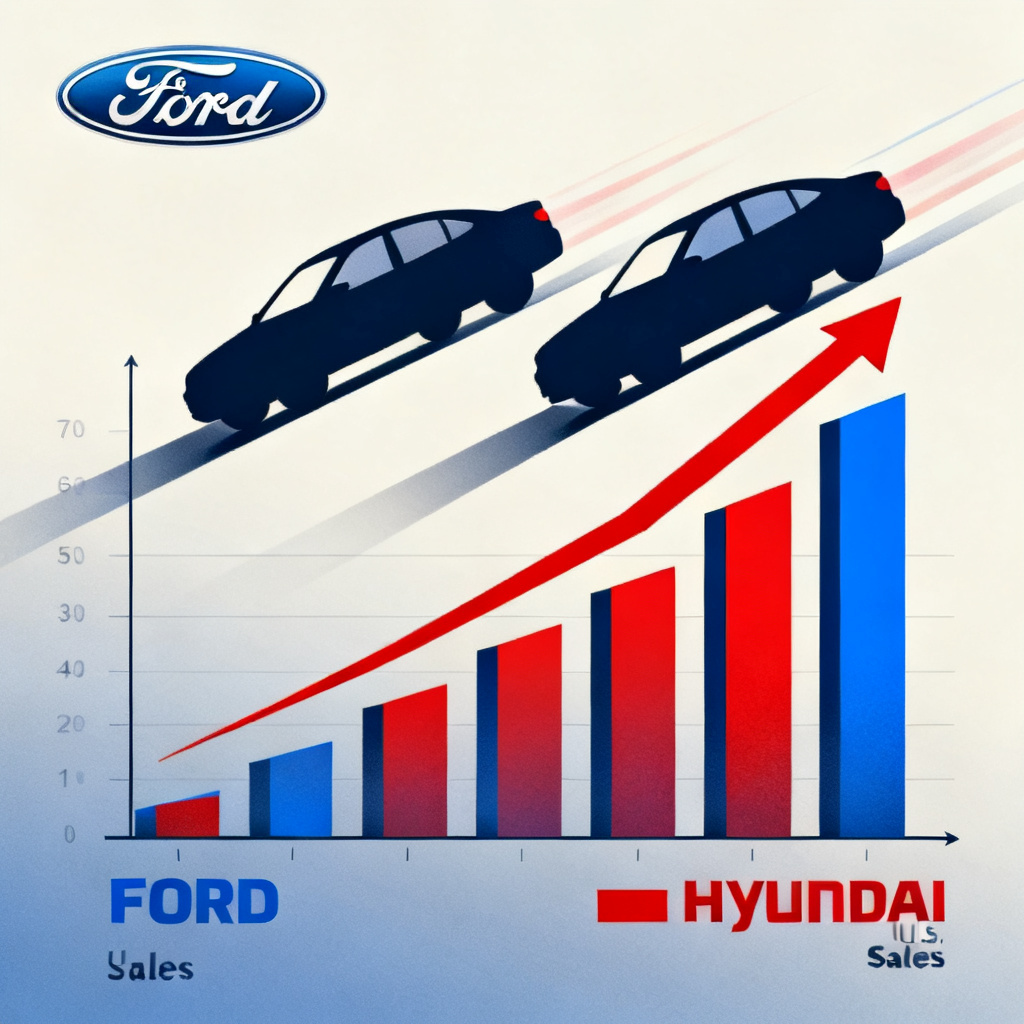
The quarterly U.S. auto sales race just delivered a photo finish that nobody quite saw coming. Ford Motor posted a 6.6% year-over-year decline, moving 507,395 light-duty vehicles in Q3. Its surging rival, the Hyundai Motor group (including Hyundai, Kia, and Genesis), reported a 5.4% gain to 506,200 units. The difference? A razor-thin 1,195 vehicles. A forecast last week had Hyundai overtaking Ford for the first time ever. It didn't happen. But for how long?
Why the Narrow Margin Matters for Investors
This is more than a bragging rights bullet point. It's a stark signal of shifting market dynamics. For years, the U.S. sales podium was a predictable Detroit affair, with GM and Ford battling Toyota. Now, Hyundai's relentless climb—fueled by design, value, and a formidable hybrid lineup—has turned the number three spot into a genuine battleground. Ford's full-year lead is still a comfortable ~89,700 units, but the quarterly squeeze tells the real story: momentum has a new address.
Ford tried to downplay the threat, pointing out that Hyundai and Kia operate as separate brands in the U.S. That's a technicality for corporate reports, not for customers or market share charts. On the dealer lot and in the sales race, they're one powerful force.
The F-Series Lifeline and Lingering Headwinds
So how did Ford cling to its spot? The answer, as always in Dearborn, lies with the F-Series. After supplier fires last year kneecapped production of America's bestselling truck, recovery is finally underway. Ford's U.S. sales chief, Rob Kaffl, stated, "Some of the headwinds we had early in the year are kind of behind us, and it's really setting us up for a really strong Q4."
The numbers back him up: F-Series sales were down only 1.9% in Q3, a massive improvement from earlier disaster-level declines. Excluding the discontinued F-150 Lightning (sales of which fell 97.1%), the core gas and hybrid truck business showed resilience. But let's be clear: when your crown jewel is just *almost* flat, while your competitor is growing at over 5%, you're running defense, not offense.
The EV Problem Isn't Going Away
While the truck business stabilizes, Ford's electric vehicle story is in full retreat. Through September, Ford's EV sales cratered 67.5% year-over-year, with an ~80% plunge in Q3 alone. Some context: the company is facing a brutal comparison to last year's Q3, when a rush to beat expiring federal EV incentives created an artificial peak. But that doesn't explain the sheer scale of the drop-off. It highlights a brutal reality: when subsidies dry up and consumers get picky, demand for many current EV models evaporates.
This puts Ford in a tricky pivot. It's dialing back billions in EV investment while betting heavily on hybrids. That's a smart, pragmatic move for the next 3-5 years, but it leaves the long-term narrative—and valuation premium—associated with electrification in the hands of Tesla and the Chinese automakers.
The Broader Market Chessboard
Zoom out, and the competitive landscape gets even more interesting. General Motors remains the 2026 U.S. leader but saw sales dip 5.5% in Q3. Toyota, buoyed by its dominant hybrid and EV lineup, continues to gain ground. Meanwhile, Tesla reported 486,532 deliveries, topping expectations and reminding everyone that the volume EV game still has only one true player.
For traders, this quarter sets up a tense Q4. Ford is betting the farm on a "really strong" finish powered by renewed truck supplies. Hyundai has momentum, a full product arsenal, and nothing to lose. The year-end sales push will be a direct test of brand strength and consumer preference.
The Key Questions Heading Into Q4
Can Ford's truck rebound outpace Hyundai's across-the-board assault? The F-Series is a profit engine, but Hyundai's strength is its spread—sedans, SUVs, and increasingly compelling trucks of its own.
Is Ford's EV collapse a temporary blip or a fundamental repositioning? The answer will dictate its capital allocation for years.
Most importantly, does holding onto third place this quarter signal a stabilized floor for Ford, or just a brief pause before Hyundai inevitably passes? One thing's for sure: in today's auto market, standing still means falling behind. Ford isn't standing still, but its rearview mirror is full.