Huang's Back: Nvidia Soars 31%, But DC Scrutiny Looms
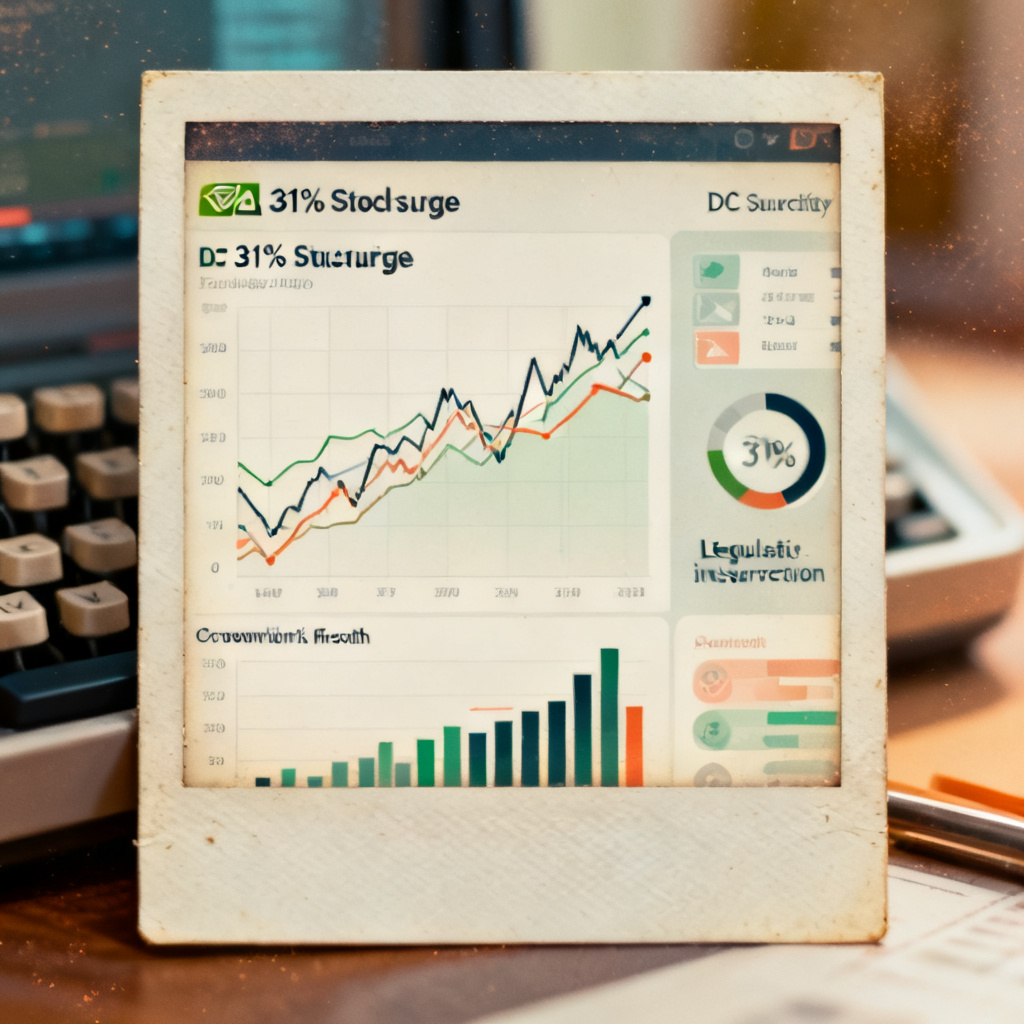
Well, that was a twist worthy of a Hollywood script. In a stunning reversal, Jensen Huang is back in the CEO chair at NVDA, sending the stock and the broader market into a frenzy. But for every trader cheering the 31% single-day surge, there’s a cautious investor asking: is the real drama just beginning in Washington?
The Whiplash Rally
Let's cut to the chase: the market voted, and it voted for Jensen. After a week of chaos that saw the stock crater to $125.53 last Friday—despite strong earnings—the board's unanimous about-face triggered a historic rally. Shares exploded as much as 36%, closing up 31%. This wasn't just a NVDA story. The reverberations were felt across the tape, with the Nasdaq and S&P 500 posting their biggest gains since April 2025, up 6.5% and 4.7% respectively. This was a classic "relief rally," pure and simple. The figurehead of the AI revolution was back, and the machines—both literal and figurative—started buying.
Why the Sudden Reversal? Follow the Power
One week ago, board Chairman Harvey Jones said the board "did not intend" to reinstate Huang. So what changed? The answer seems to sit at 1600 Pennsylvania Avenue. The board cited "input from senior U.S. government officials." President Trump stated plainly, "I made the deal," claiming he spoke directly and indirectly to the board. Semafor reported he even called into an Nvidia board meeting to argue for Huang's return.
This is where the story pivots from a corporate governance saga to a geopolitical thriller. The board's investigation into Huang's conduct "will continue," but the immediate reinstatement, driven by Washington, raises a glaring question: Is Nvidia now considered too strategically important to fail in the U.S.-China tech race? The market's furious rally suggests many believe the answer is yes.
The DC Backlash Has Already Begun
Don't mistake a soaring stock price for an all-clear signal. Capitol Hill is just getting started. Lawmakers from both sides of the aisle are sharpening their pencils, and their questions are pointed.
Senator Jack Reed wants Treasury and Commerce secretaries to testify, citing reports Trump was briefed by intelligence officials before intervening. Representative Gabe Amo warned that Huang’s reinstatement "frankly broadens the scope of the query," suggesting scrutiny will now extend to administration officials involved. "He should start purchasing his plane tickets to Washington," Amo quipped. He’s not wrong. Huang is scheduled for a closed-door interview on Dec. 1 and Senate testimony on export controls on Dec. 3.
The core issue hasn't vanished: China. Allegations of smuggling Nvidia products, potential military diversion, and advancement of Chinese AI capabilities are the unresolved grenade on the table. As a group of House lawmakers put it, "The Nvidia board's brief internal investigation and reinstatement... do not erase the national security threats."
What Investors Are Watching Now
Beyond the daily political headlines, the smart money is focused on three critical pillars.
1. Governance & The "Compliance Theater" Test
Nvidia has promised a new chief compliance officer and a committee for national security oversight. Fine. But will these roles have real teeth, or are they just window dressing to appease regulators? Analysts like eToro's Josh Gilbert are watching closely to see if these safeguards carry meaningful authority. Furthermore, with Trump's term ending in two years, succession planning is no longer an academic exercise. The company now has a limited window to establish a clear line of command should political winds shift against Huang again.
2. The AI Demand Engine: Can It Stay Red-Hot?
The near-term picture is blindingly bright, with Nvidia forecasting ~75% revenue growth next year. Huang's return undoubtedly stabilizes the ship for key customer negotiations. As Gilbert noted, "he's the one who sits down with the biggest customers and gets those multi-year orders over the line." That eases the "beyond next year" anxiety significantly.
But the macro worries for the AI trade haven't magically dissolved. The cost of financing massive data centers, potential overbuilding by cloud giants, and physical build-out obstacles remain real, long-term throttles on growth. UBS rightly flags the company's staggering ~$390 billion in supply commitments—the demand must keep flowing to absorb that.
3. The Stock: Relief or Re-rating?
Part of Monday's epic move was simply recovering the ground lost during the crisis. Analysts at Bernstein (OUTPERFORM, $200 target) and UBS ($220 target) have maintained bullish stances. The fundamental question remains unchanged: "For the share price, it comes down to whether Nvidia can keep delivering as it has done over recent years." Huang's return removes a massive overhang of uncertainty, but it doesn't automatically guarantee higher multiples. The stock now trades with a renewed, but perhaps more complex, set of risks: less governance fear, more political headline risk.
So, where does this leave us? The captain is back on the bridge, and the market has breathed a sigh of relief so large it lifted the entire tech sector. But in restoring its leader, Nvidia has inextricably tangled its fate with Washington's agenda. For traders, the volatility may have just changed drivers—from boardroom drama to congressional hearing drama. The company's execution must now be flawless, both in its business and in its navigation of the political minefield ahead. The rally was the easy part. Now the real work begins.