Is a U.S. Diesel Export Ban a Short-Term Fix with Long-Term Pain?
The White House Mulls a Nuclear Option for Diesel Prices
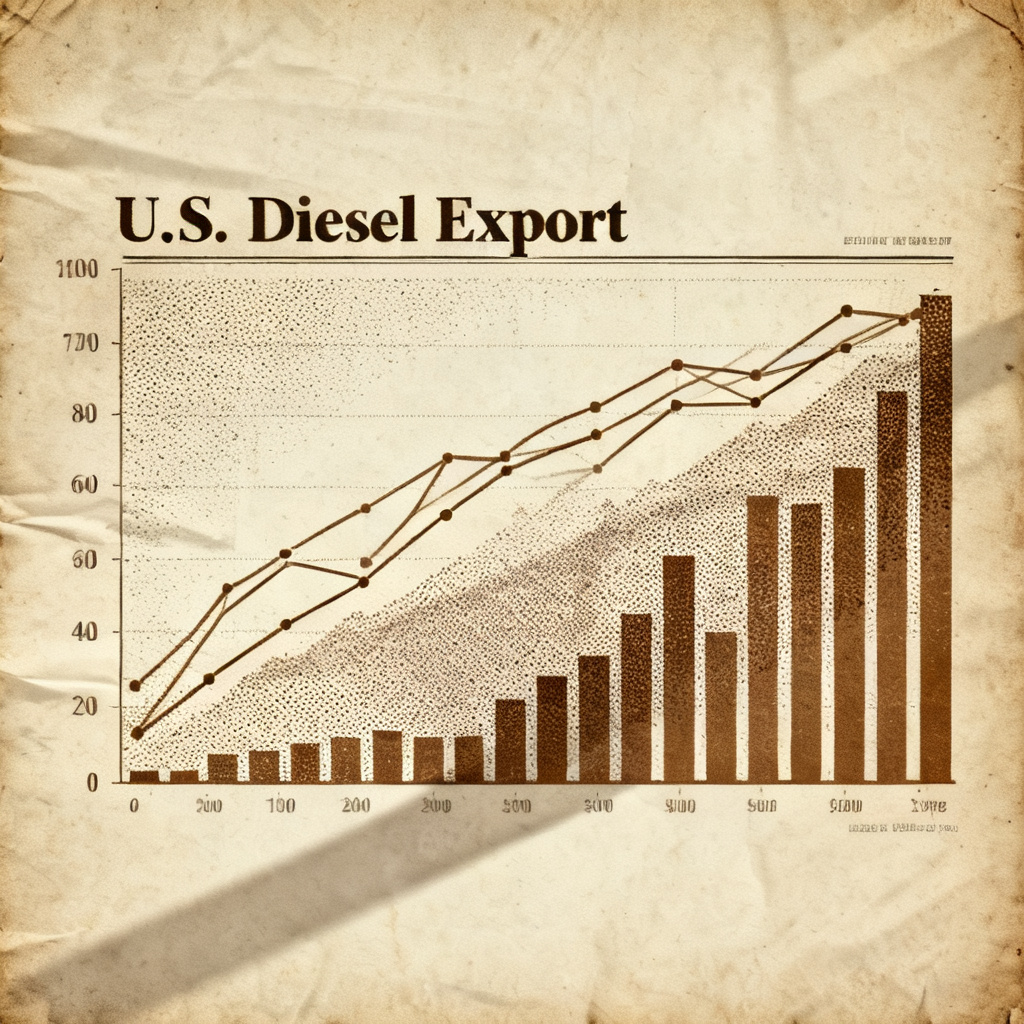
Treasury Secretary Scott Bessent dropped a potential market bombshell this Tuesday: the Trump administration is actively examining whether to implement a ban on diesel exports. The goal? To try and cool off record-shattering prices for the fuel that literally moves the American economy.
"We're examining whether it's feasible in terms of the overall refining capacity and whether a full or partial ban would work," Bessent said during a bilateral meeting at the UN. President Trump himself confirmed he's pushing for the move internally, promising a swift decision "one way or another." His logic is blunt: "I've said let's not send out the diesel. We make a lot of diesel."
The political pressure is undeniable. With the November midterms looming, Republican lawmakers like Sen. Chuck Grassley are hearing from constituents getting crushed at the pump. The numbers are staggering. The national average for a gallon of diesel hit a record $6.53 this week, a brutal premium of almost $3 over last year. In California, drivers are facing a mind-bending $8.44 per gallon.
But for traders and investors, the real question isn't about political calculus. It's this: Would slamming the export gate actually work, or would it be a classic case of curing the symptom while making the disease worse?
Why Diesel Prices Are on a Rocket Ship
To understand the potential fallout of a ban, you first need to know what lit the fuse. This isn't just about crude oil. It's a perfect storm in global refining capacity.
First, Ukraine's drone campaign has successfully targeted Russian refineries, forcing Moscow to impose its own diesel export ban. That took a major supplier offline. Simultaneously, refineries in the Middle East are operating under threat from Iranian and Houthi attacks. And the critical Strait of Hormuz chokepoint is shadowed by Iranian threats to tankers, constraining flows.
The result? A global diesel shortage. And U.S. refiners, with their sophisticated capacity, have raced to fill the void. They've ramped up exports, supplying the world and booking sky-high profits in the process. The crack spread—the profit margin for turning crude into diesel—tells the story. On Tuesday, diesel traded around $207 a barrel. With crude oil well below $100, that's a refining margin north of $100 per barrel. That's not just good; it's historic.
The Short-Term Play: A Domestic Sugar Rush
On paper, the mechanics of a ban are simple. If you stop U.S. diesel from leaving the country, you increase domestic supply. More supply chasing the same demand should, in theory, lower prices. For a farmer in Iowa or an independent trucker, that would provide immediate, tangible relief. It's a direct political win.
Analysts agree the initial price impact would likely be positive for U.S. consumers. "A diesel export ban would be a short-term positive for prices," one leading energy analyst noted, referencing the domestic market. In a volatile election season, "short-term" might be all that matters to some in Washington.
The Long-Term Hangover: How a Ban Could Backfire
This is where the market-savvy perspective kicks in. The energy complex is a globally interconnected machine. Disrupt one gear violently, and you risk breaking the whole mechanism.
First, consider the signal it sends to refining companies. Their investments are enormous and long-term. If the government can suddenly cut off their access to the highest-paying global markets with the stroke of a pen, what does that do for future investment confidence? Why would a refiner spend billions on capacity upgrades or maintenance if their profitable export markets can be deemed politically inconvenient?
Second, think about global alliances. Europe, already scrambling to replace Russian diesel, has leaned heavily on U.S. exports. Cutting them off overnight would strain relationships and could trigger retaliatory trade measures in other sectors.
Third, and perhaps most critically, it does nothing to address the root cause: a global refining shortage. It simply reallocates existing barrels within U.S. borders. Once the initial domestic inventory bump is burned through, U.S. prices would remain tethered to the global crisis—but with a hobbled refining sector less willing or able to produce at peak levels. The analyst's warning is stark: such a ban "would have a worse long-term impact."
You create a temporary domestic price cap at the expense of long-term supply health. It's a classic myopic policy.
The Trader's Checklist: What to Watch
For anyone with skin in the game—be it in energy stocks (XLE), refining ETFs, or the futures pits—the watchlist is clear.
Key Signals:
Administration Rhetoric: Listen for mentions of "refining capacity" and "feasibility." If the talk shifts from "whether" to "how," volatility is coming.
Refiner Stock Reaction: Names like Valero (VLO), Marathon Petroleum (MPC), and Phillips 66 (PSX) will be direct proxies for market fear. A sell-off signals traders are pricing in policy risk.
The Crack Spread: Watch the diesel-to-crude price differential. Any narrowing ahead of a potential announcement will show the market pre-pricing a flood of domestic supply.
Global Arb Flows: If a ban looks likely, watch for U.S. diesel cargoes racing to beat the deadline, and then a scramble for alternatives from Europe and Latin America, potentially spiking prices elsewhere even higher.