Meta's Capex Miss Spooks Traders; AI Bet Grows
Meta's Earnings: AI Ambition Collides With Market Reality
Mark Zuckerberg’s vision is expensive, and for a moment on Wednesday, the market blinked. META shares dipped in after-hours trading following a quarterly report that delivered a powerful revenue beat but also a significant miss on the number Wall Street is watching most intensely: capital expenditures.
The headline numbers were stellar. The social media giant posted adjusted EPS of $7.31, handily beating estimates of $6.79. Revenue soared 33% year-over-year to $56.31 billion, its fastest growth clip since 2021. So why the negative knee-jerk reaction? It's a classic case of the market looking six quarters ahead while management looks six years ahead.
The Capex Conundrum: A Slow Roll or a Strategic Pause?
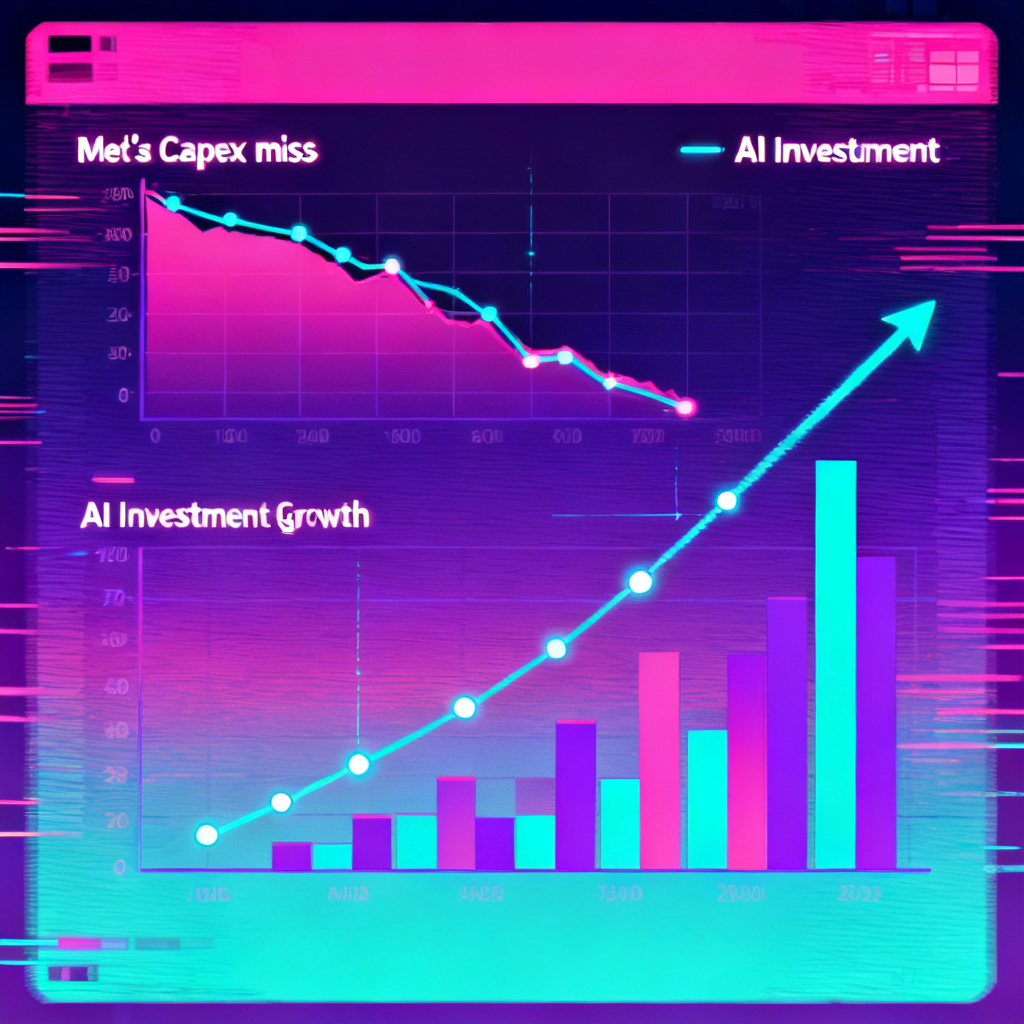
Here’s the core tension: Meta’s Q1 capex came in at $19.84 billion, well below the Street’s expectation of nearly $27.6 billion. At first glance, that looks like a pullback. But management immediately raised its full-year capex forecast to a staggering $125-$145 billion, up from a prior range of $115-$135 billion.
The message is clear: the spend isn't slowing down; it's being re-timed. The company cited expectations for "higher component pricing" and data center costs. For traders, the near-term "miss" might spark fears of delays in the AI infrastructure build-out. For long-term investors, the raised guide confirms the scale of Zuckerberg’s commitment. The question is whether the market's patience will match his pocketbook.
User Growth Stalls: Geopolitics or Saturation?
Beneath the revenue fireworks, a softer metric gave investors pause. Daily Active People (DAP) came in at 3.56 billion, up 4% year-over-year but below the projected 3.62 billion. Meta pointed directly to "internet disruptions in Iran" and restrictions on WhatsApp in Russia. This is the new reality for global tech: geopolitical fissures are now tangible metrics on an earnings report.
More concerning was the sequential dip and a drop in Average Revenue Per Person (ARPP) to $15.66 from $16.56. Is this just a blip from those disruptions, or the first sign of monetization pressure in a maturing user base? The company's Q2 revenue guidance of $58-$61 billion, straddling the $59.5 billion estimate, suggests confidence in the core ad engine’s resilience.
The AI Monetization Clock is Ticking
Let's be frank: that 33% revenue surge is powered by Zuckerberg’s existing AI bets making the ad business more potent. But the multi-hundred-billion-dollar question remains: when do the *new* revenue streams arrive? The debut of the Muse Spark model and the re-branded "Meta Superintelligence Labs" are steps, but investors are still waiting for the product roadmap.
Zuckerberg’s statement that the company is "on track to deliver personal superintelligence to billions of people" is a galactic ambition. The market, however, trades in quarters. The pressure to start articulating a clearer path to monetization—beyond supercharging ads—will only intensify as the spending scales to mind-boggling levels.
Efficiency Theater Amid an Spending Spree
Don't miss the corporate ju-jitsu happening here. As Meta guides to possibly $145 billion in annual capex, it's simultaneously conducting another round of workforce trimming. Headcount is up only 1% year-over-year, and the company recently announced layoffs impacting about 10% of its workforce.
The narrative is "efficiency" and "flattening the organization," but the financial reality is a historic capital intensity shift. Meta is morphing from a high-margin social software company into a capital-intensive AI infrastructure giant. The stock’s future hinges on whether that transformation generates returns worthy of the spend.
The Bigger Picture: A Test for the Whole AI Trade
Meta’s report doesn't exist in a vacuum. It landed the same day as other hyperscalers, with the entire sector riding a 14% monthly gain for the Nasdaq. The market has been piling into tech, betting that AI profits will eventually justify today's costs. Meta’s capex miss, however slight, is a tiny crack in that consensus.
It forces a question: Are we at peak AI exuberance, or is this just a minor scheduling hiccup on a decade-long journey? The one-time $8 billion tax benefit that flattered earnings this quarter won't be there next time. What will be there is more spending, more scrutiny, and a growing demand for Zuckerberg to prove that his superintelligence gamble isn't just a money furnace, but the foundation of the next Google-like profit machine.