Navigating Bull Market Complacency: Structured Risk with Credit Put Spreads
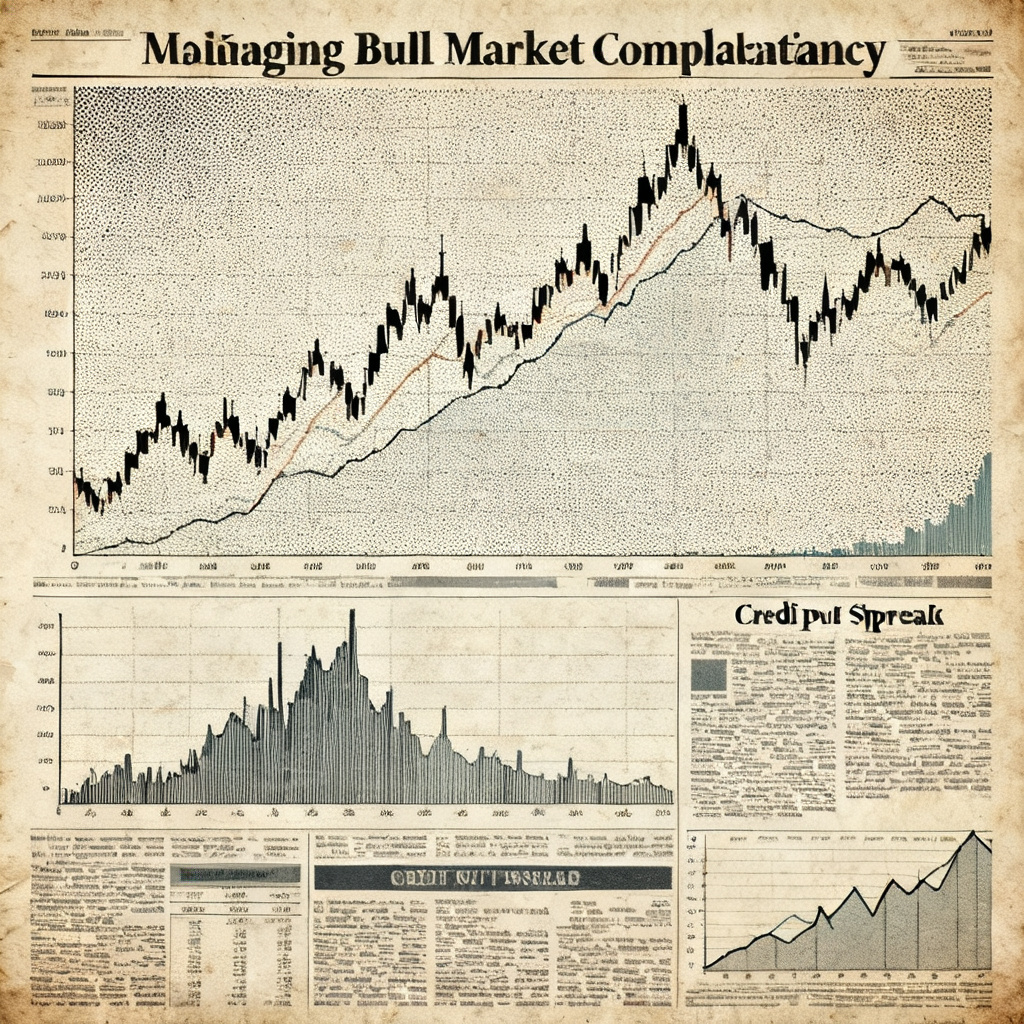
The air in a bull market is intoxicating. Stocks grind higher, dips are shallow and bought aggressively, and volatility seems to vanish. For options traders, this environment presents a powerful but perilous opportunity. The temptation is to sell puts aggressively, collecting seemingly easy premium from the decay of time and elevated implied volatility that often lags behind realized price swings. Yet, this is precisely when complacency—a trader's greatest enemy—sets in. Overbought rallies can reverse sharply, turning a high-probability income trade into a painful assignment. This is where a disciplined, structured approach becomes critical. This article explores how to navigate bull market complacency by strategically deploying credit put spreads, a defined-risk strategy perfect for overbought conditions.
Understanding the Bull Market Trap: Complacency & Overbought Conditions
A sustained bull run creates a unique market psychology. Fear of missing out (FOMO) dominates over fear of loss. Economic data is interpreted optimistically, and bad news is brushed aside. From a technical standpoint, assets can become significantly overbought, as measured by indicators like the Relative Strength Index (RSI) persistently above 70. While an asset can stay overbought for extended periods, it signals that a near-term consolidation or pullback is statistically more likely.
The trap for options sellers lies in volatility. In a strong bull market, realized volatility (the actual day-to-day price movement) is often low, as trends are steady. However, implied volatility (IV), which is priced into options, can remain stubbornly elevated due to lingering macro uncertainties or simply because traders are willing to pay for "cheap" protection. This creates a seemingly ideal scenario: selling options with juicy premium against a steadily rising asset. Complacency enters when traders neglect to define their risk, selling naked puts or moving their strike prices dangerously close to the current price to chase more credit. A sudden, volatility-expanding correction can quickly erase months of gains.
Why Credit Put Spreads are the Ideal Tool
A credit put spread (also known as a bull put spread) is a two-legged options strategy designed to profit from a stock or index staying above a certain price level by expiration. Here's how it's constructed:
- Sell one put option at a strike price you believe the underlying will stay above (this generates the credit).
- Buy one put option at a lower strike price (this defines your maximum risk and costs a debit).
The net result is a net credit received into your account. Your maximum profit is that initial credit. Your maximum loss is the difference between the strike prices, minus the credit received.
In an overbought bull market, this structure offers three key advantages over selling a naked put:
1. Defined and Capped Risk
The long put leg acts as an insurance policy. No matter how far the market drops, your loss is predefined and known when you enter the trade. This eliminates the catastrophic risk of a naked short put, allowing you to sleep soundly even during a pullback.
2. Capital Efficiency
Because the risk is defined, brokerages require significantly less margin to hold the position compared to a naked short put. This frees up buying power for other opportunities.
3. Strategic Strike Selection
The spread forces you to choose two strikes: a short strike for income and a long strike for protection. This inherently builds a buffer zone, encouraging you to sell puts further out-of-the-money (OTM) than you might otherwise, respecting the overbought conditions.
Structuring Your Spread for an Overbought Rally
The art of the credit put spread lies in its construction. In a complacent, overbought market, your goal is to collect premium while giving the trade ample room to withstand a healthy pullback.
Step 1: Identify the Right Underlying
Focus on high-quality, liquid assets that are participating in the bull run but showing signs of being overextended. Look for stocks or ETFs with strong long-term trends (e.g., above their 200-day moving average) but with a daily RSI above 70. Avoid companies with weak fundamentals or earnings reports imminent.
Step 2: Choosing Expiration & Strikes (The "Buffer Zone")
This is the most critical step for navigating complacency.
- Expiration: Opt for 30-45 days to expiration. This provides enough time for the trade to work (time decay accelerates in the final weeks) and allows room for a short-term pullback without immediate assignment risk.
- Short Strike Selection: Identify key technical support levels below the current price—such as the 20-day or 50-day moving average, or a prior consolidation zone. Your ideal short strike should be at or below this support level. In an overbought market, this strike will be further OTM, resulting in less premium but significantly higher probability of success.
- Long Strike Selection: This defines your worst-case scenario. Place it at the next major support level below your short strike. The width of the spread (e.g.,
$5or$10between strikes) determines your risk/reward. A wider spread collects more credit but has a higher maximum loss.
Step 3: Real-World Trade Example
Let's assume QQQ (Invesco QQQ Trust) is trading at $440 after a strong, multi-week rally. Its RSI is at 75, indicating overbought conditions. You are bullish long-term but expect a possible 3-5% pullback.
- Underlying: QQQ @ $440
- Strategy: Credit Put Spread
- Expiration: 45 days out
- Trade: Sell the $425 Put / Buy the $415 Put
- Net Credit Received: $2.50 per share ($250 per 1-lot spread)
- Max Profit: $250 (the credit received). Achieved if QQQ closes above $425 at expiration.
- Max Loss: ($10 strike width - $2.50 credit) x 100 = $750. Occurs if QQQ closes below $415 at expiration.
- Breakeven Price: $425 - $2.50 = $422.50.
Why This Works Here: The short strike at $425 is approximately 3.4% below the current price, aligning with your expected pullback buffer. It also likely sits near a key moving average. You are paid $250 to assume the risk that QQQ won't drop more than ~4% over the next 45 days—a favorable bet in a bull market, even an overbought one. Your risk is strictly limited to $750, no matter what happens.
Risk Management and Trade Adjustments
Entering the trade is only half the battle. Managing it through volatility is key.
- Defined Exit Points: Decide in advance to close the spread for a small loss (e.g., if the loss reaches 2x the credit received) or if the underlying breaks decisively below your short strike's support level before expiration.
- The "No Adjustment" Rule: Often, the best adjustment for a defined-risk spread is none at all. The risk is capped, so you can let the structure work, even through discomfort. Avoid the temptation to "roll" the spread down prematurely for a larger credit, as this often increases risk.
- Profit Taking: In fast-moving markets, consider taking profits early (e.g., at 50-70% of max profit) rather than holding to expiration, especially if the market remains overbought. This frees up capital and locks in gains.
Conclusion: Discipline Over Complacency
Bull market complacency isn't a signal to avoid trading; it's a signal to trade smarter. Credit put spreads offer a structured, disciplined framework to participate in bullish trends while explicitly defining and limiting your downside—a non-negotiable requirement when prices are extended. By focusing on quality underlyings, building a generous buffer zone into your strike selection, and respecting your predefined risk parameters, you can transform an overbought, anxiety-inducing rally into a landscape of calculated, high-probability income opportunities. Remember, in options trading, the goal isn't to be right on every trade, but to be risk-right on all of them.