Oil Markets on Edge: Geopolitics Hits Prices, Gas Taps $4
Geopolitical Tremors Shake the Oil Market
Oil traders started the week riding a rollercoaster built by geopolitics. After an initial surge that saw Brent crude briefly crack the psychological $90 per barrel barrier, prices settled into a mixed, hesitant pattern. The catalyst? A carefully parsed statement from Iran. The regime’s foreign ministry spokesman, Esmail Baghaei, suggested talks with the U.S. could be pursued—if they served Iran’s "national interests."
This whiff of potential diplomacy was enough to take some steam out of the rally. But make no mistake: this is a market being jerked around by bullets and rhetoric, not fundamentals. For investors, the message is clear: ignore the Middle East at your portfolio's peril. The path of least resistance for oil is up, and the risks are squarely to the supply side.
Where Prices Landed After the Volatility
By the session's close, the numbers told a story of a market caught between fear and skepticism. The international benchmark, Brent crude for September delivery, managed to cling to a 0.4% gain, settling at $88.47. Meanwhile, the U.S. benchmark, West Texas Intermediate (WTI) for August, dipped 0.2% to $82.36, erasing its earlier advance.
This divergence is worth watching. It often signals that localized U.S. inventory data or pipeline flows are playing a role. But the bigger picture is the $6+ premium for Brent. That spread screams "geopolitical risk," as global traders price in the persistent threat to shipments from the world's most critical oil chokepoint.
The Strait of Hormuz: The World's Most Dangerous Waterway
Why the jitters? Look to the map. The Strait of Hormuz is the linchpin of global oil flows, typically handling a staggering 20% of the world's traffic. Right now, it's a warzone. The U.S. military has completed nine consecutive nights of strikes against Iranian targets—hitting coastal surveillance, air defense, and missile storage sites—in retaliation for attacks that have now killed three American service members.
The Iranian Revolutionary Guard's response? A renewed pledge, via the Tasnim news agency, that "not a single drop of oil, gas, or chemical fertilizer" will pass through the strait. That’s the ultimate bullish headline for oil, and while it’s likely bluster, the market can’t afford to discount it. Shipping traffic has already fallen sharply. Every tanker captain rerouting adds time, cost, and a tangible risk premium to every barrel.
The Pump Price Reality Check
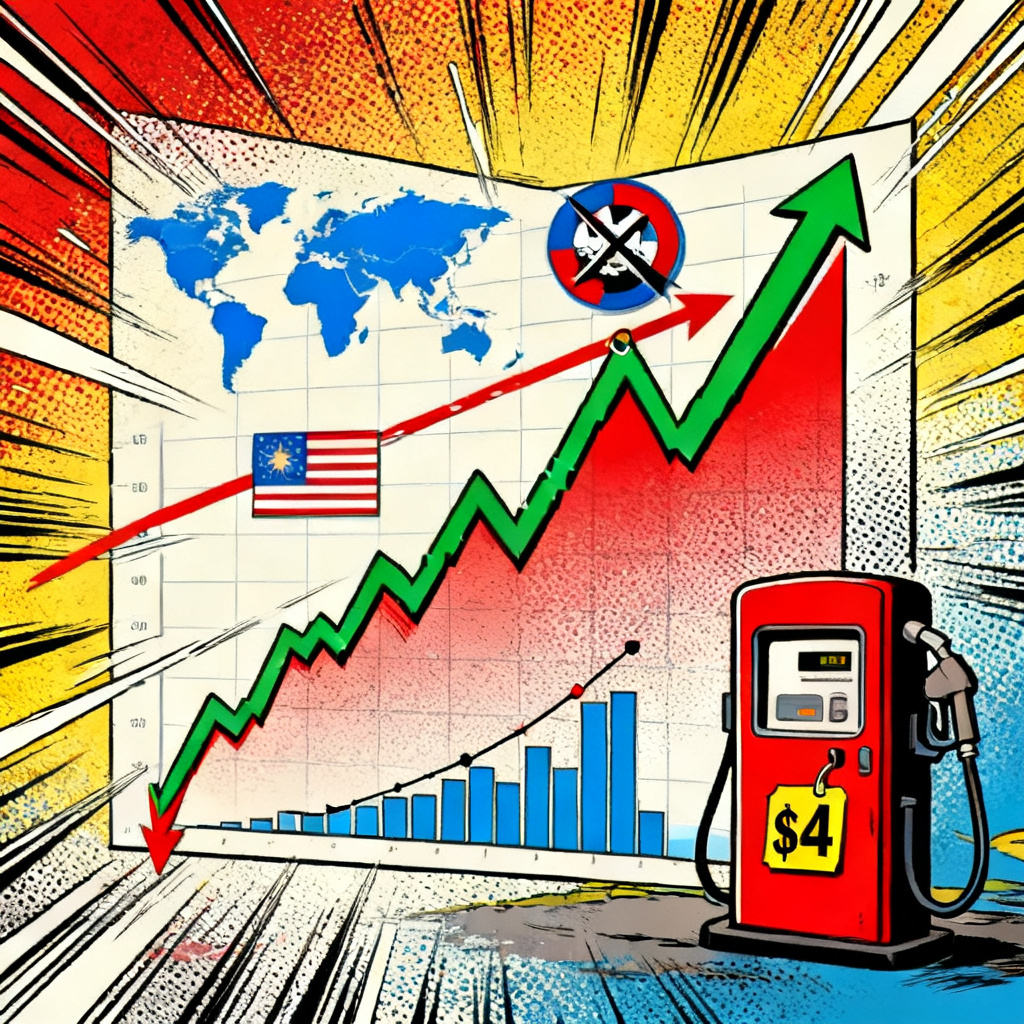
This isn't just a trader's problem. The instability has a direct, painful line to Main Street. On Monday, the national average price for regular gasoline in the U.S. nudged back to $4 a gallon, a level not seen since mid-June. That June period coincided with a short-lived interim deal meant to reopen the Strait and halt fighting.
The correlation is stark and instructive. When Hormuz simmers, pump prices retreat. When it boils, American drivers feel the burn. This is the most immediate transmission mechanism from geopolitical risk to consumer wallets and inflation metrics.
Expert Insight: Why $100 Oil Is Back on the Table
So, is this a temporary spike or the start of something bigger? Amrita Sen, founder of Energy Aspects, laid out a compelling bull case. "Do we think prices should or could go to triple digits? Absolutely," she stated bluntly.
Her reasoning cuts to the core of today's market mechanics. First, a substantial slowdown in Hormuz traffic, combined with depleted global inventories, creates a fundamental supply squeeze. But second, and perhaps more powerfully, is the positioning. "Remember the market is short as well, right?" Sen noted. "It was a market that went heavily short as soon as Hormuz was starting to reopen, that's why we went into the seventies. So, those shorts are still covering as we speak."
That's a crucial point for traders. A short squeeze layered on top of a genuine supply threat can accelerate moves exponentially. The momentum isn't just from new buyers; it's from bears being forced to buy back their positions at higher and higher prices.
The Market's Dangerous Complacency
Perhaps the most telling part of Sen's commentary was her observation on market sentiment. She described a market that is "still quite complacent." She recounted macro funds asking, "we have had this before, we didn't really go up much above $100, what's so different this time, we have AI to worry about."
That right there is the contrarian signal. When the crowd is focused elsewhere—enamored with the AI trade and dismissive of a recurring risk—that’s often when the overlooked risk erupts. History doesn't repeat, but it often rhymes. Are traders underestimating Iran's willingness to escalate, or the structural tightness in today's oil market? It’s a dangerous gamble.
The Trader's Playbook
For active traders and long-term allocators alike, this setup demands attention. The key levels are obvious: $90 Brent is the near-term resistance, with $100 the headline-grabbing target that becomes a self-fulfilling prophecy if breached. On the downside, any genuine de-escalation—more than vague talk of talks—could see a swift retracement back toward the low $80s for Brent as the geopolitical premium evaporates.
Beyond the front-month futures, watch the equities. Major integrated oil companies often move with a lag to crude prices, but pure-play producers and the beleaguered offshore drillers serving the Middle East are more sensitive to these regional tensions. The energy sector’s correlation to oil has been loose lately, but a sustained move above $90 will force a re-rating.