Post-Earnings Vega Cliff: Profiting from IV Collapse with Credit Put Spreads
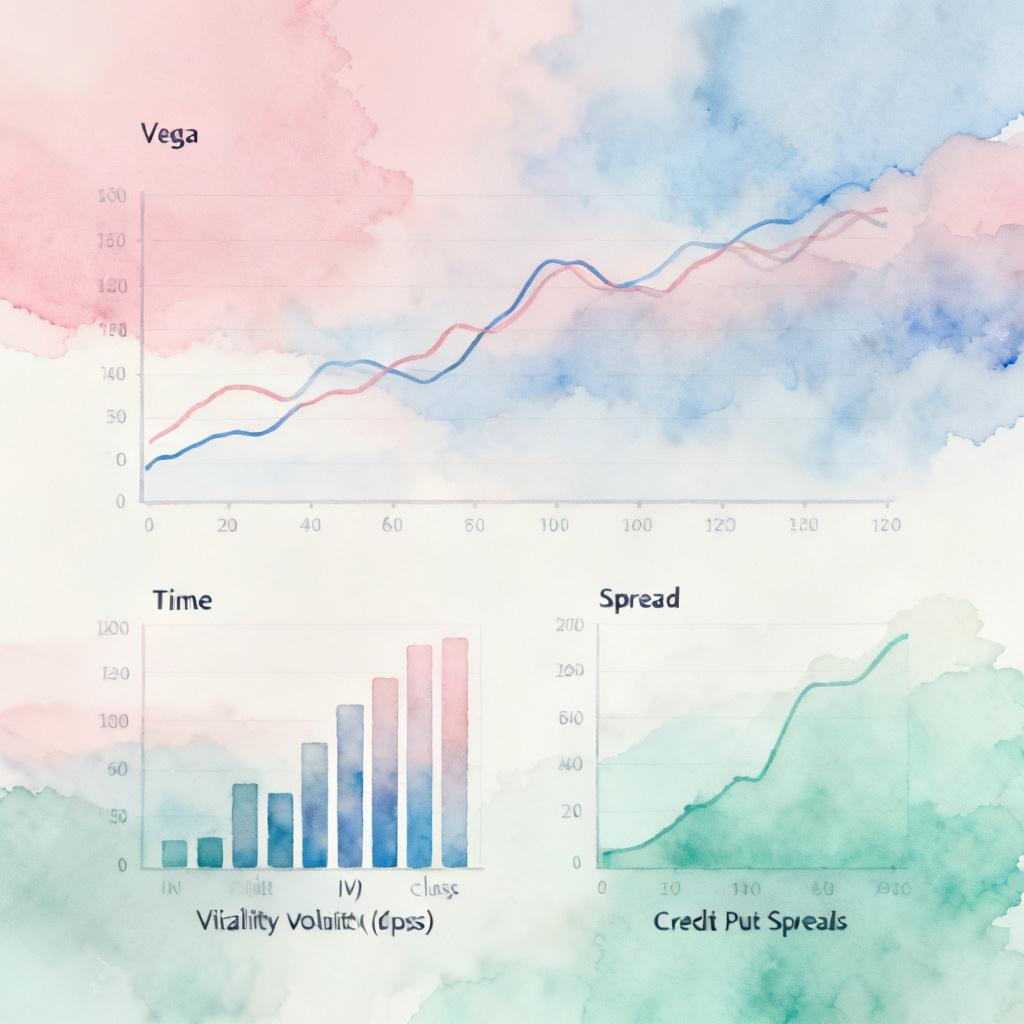
Post-Earnings Vega Cliff: Timing Credit Put Spreads After the IV Collapse
For an options trader, earnings season is a period of intense anticipation. The frenzied buildup, characterized by soaring implied volatility (IV), is often followed by a sudden, precipitous drop. This phenomenon—aptly named the "Vega Cliff"—presents a unique opportunity. While many traders focus on the pre-earnings volatility crush, the post-earnings landscape can be a fertile ground for deploying specific, high-probability strategies. This guide focuses on navigating the IV collapse to strategically time credit put spreads for consistent income.
Understanding the Post-Earnings Landscape: IV Crush & The Vega Cliff
Implied volatility is the market's forecast of a likely movement in a stock's price. As an earnings report approaches, uncertainty (and therefore IV) peaks. Once the news is out, whether good or bad, that uncertainty evaporates almost instantly. This is the IV crush.
The "Vega Cliff" metaphor visualizes this sharp decline in an option's value attributable purely to the drop in IV. Vega measures an option's sensitivity to changes in implied volatility. Long options (especially out-of-the-money strangles) suffer devastating vega risk during this crush. However, as sellers of options, we can use this to our advantage. By entering trades after the collapse, we sidestep the cliff entirely and trade in a more stable, predictable environment.
Why Credit Put Spreads Shine After Earnings
A credit put spread, or bull put spread, involves selling one put option at a higher strike price and buying one put option at a lower strike price in the same expiration cycle. Both legs are executed for a net credit. This defined-risk strategy profits if the stock price stays above the sold put's strike at expiration.
Post-earnings, this strategy aligns perfectly with the new market conditions:
- Lower Premiums, Higher Probability: The post-crush IV leads to cheaper option premiums. While the absolute credit received may be smaller than pre-earnings, the probability of success is often significantly higher because the extreme, news-driven price swings have passed.
- Defined, Manageable Risk: The long protective put establishes your maximum loss upfront. This is crucial after a volatile event, as it allows for clear risk management.
- Capitalizing on Stabilization: Following the initial post-earnings move, the stock often enters a consolidation phase. A credit put spread profits from this stability or a modest bullish drift as the emotional reaction subsides.
Criteria for Selecting Post-Earnings Trades
Not every stock is a good candidate. Apply these filters to find the best setups:
1. The Earnings Reaction Must Be "Clear"
Look for stocks that have made a decisive move. A strong up move is the classic bullish signal for a put spread. However, a severe but overdone down move on decent earnings can also present an opportunity for a contrarian play if you believe the selling was excessive. Avoid stocks that are flat or gyrating wildly with no direction—clarity is key.
2. IV Must Have Collapsed
Verify that the IV percentile or rank has fallen dramatically from its pre-earnings peak. Your brokerage platform should show this data. Entering before the full crush is complete exposes you to residual vega risk.
3. Identify a Logical Support Zone
Your sold strike should be placed below a clear level of technical or psychological support. This could be:
- The post-earnings reaction low.
- A key moving average (e.g., the 20-day EMA).
- A prior area of price consolidation.
This increases the odds that the stock will hold above your strike.
A Practical Trading Example: The Post-Earnings Put Spread
Let's walk through a real-world scenario.
Stock: XYZ Corp reports earnings after the close on Wednesday. They beat on both revenue and earnings and raise guidance. The stock gaps up 8% the following morning to $147 per share.
Analysis: The bullish reaction is clear. IV, which was at the 90th percentile pre-earnings, has plummeted to the 30th percentile. The stock finds initial support at $145, and the pre-earnings consolidation zone was around $142.
The Trade: We decide to sell a credit put spread on Thursday, after the open, once the initial volatility subsides.
- Expiration: We choose options expiring in 21 days. This gives enough time for the stock to stabilize but doesn't tie up capital excessively.
- Strike Selection: We sell the $140 put and buy the $135 put.
- Logic: The sold $140 strike is $5 below the current price (~3.4% buffer) and below both the post-open support ($145) and the prior consolidation ($142).
- Order Entry: We place a limit order to sell the
XYZ 21d 140/135 Put Spreadfor a net credit of $1.50.
Trade Math:
- Max Credit Received: $1.50 x 100 = $150 per spread.
- Max Risk: ($5 width - $1.50 credit) x 100 = $350 per spread.
- Breakeven Point at Expiration: $140 - $1.50 = $138.50.
- Probability of Profit: Based on the Delta of the short put (let's say ~0.25), the market estimates a roughly 75% chance the stock finishes above $140.
Risk Management & Adjustments
Even high-probability trades need a plan for when they go wrong.
Defensive Roll Down
If XYZ stock declines and threatens your short $140 strike, you can consider "rolling" the spread. This involves buying to close your current spread and selling a new spread at lower strikes (e.g., $137.50/$132.50) in a later expiration for another net credit. This takes in more premium, lowers your breakeven, and gives the trade more time to recover, but it also increases total capital at risk.
The Strategic Exit
Your best defense is often a simple exit rule. Decide on a threshold—for example, if the stock closes below your short strike ($140) or if the loss reaches 2x the credit received ($300). Adhering to a strict rule prevents a manageable loss from becoming a max loss event.
Common Pitfalls to Avoid
- Jumping In Too Early: Wait for the IV crush to complete. Let the stock make its initial move and find a range.
- Choosing the Wrong Expiration: Avoid the very next weekly expiration. The gamma risk (sensitivity to price movement) is too high. Opt for 2-6 weeks out for a better theta (time decay) profile.
- Ignoring the Trend: Don't try to catch a falling knife. The post-earnings trend (up or down) is your friend. Place your spread in the direction of the established post-news momentum.
Conclusion: Patience for Premium
The post-earnings Vega Cliff creates a hazardous environment for buyers of premium but a calculated opportunity for sellers. By patiently waiting for the IV crush to settle and the stock's reaction to become clear, you can deploy credit put spreads with a significant statistical edge. This approach swaps the lottery-ticket excitement of pre-earnings plays for the methodical, disciplined process of generating consistent income from stabilized volatility. Focus on clear price reactions, defined support, and strict risk management to turn the aftermath of earnings events into a repeatable trading edge.