Treasury's $6B Buyback Fizzles as Bond Yields Soar
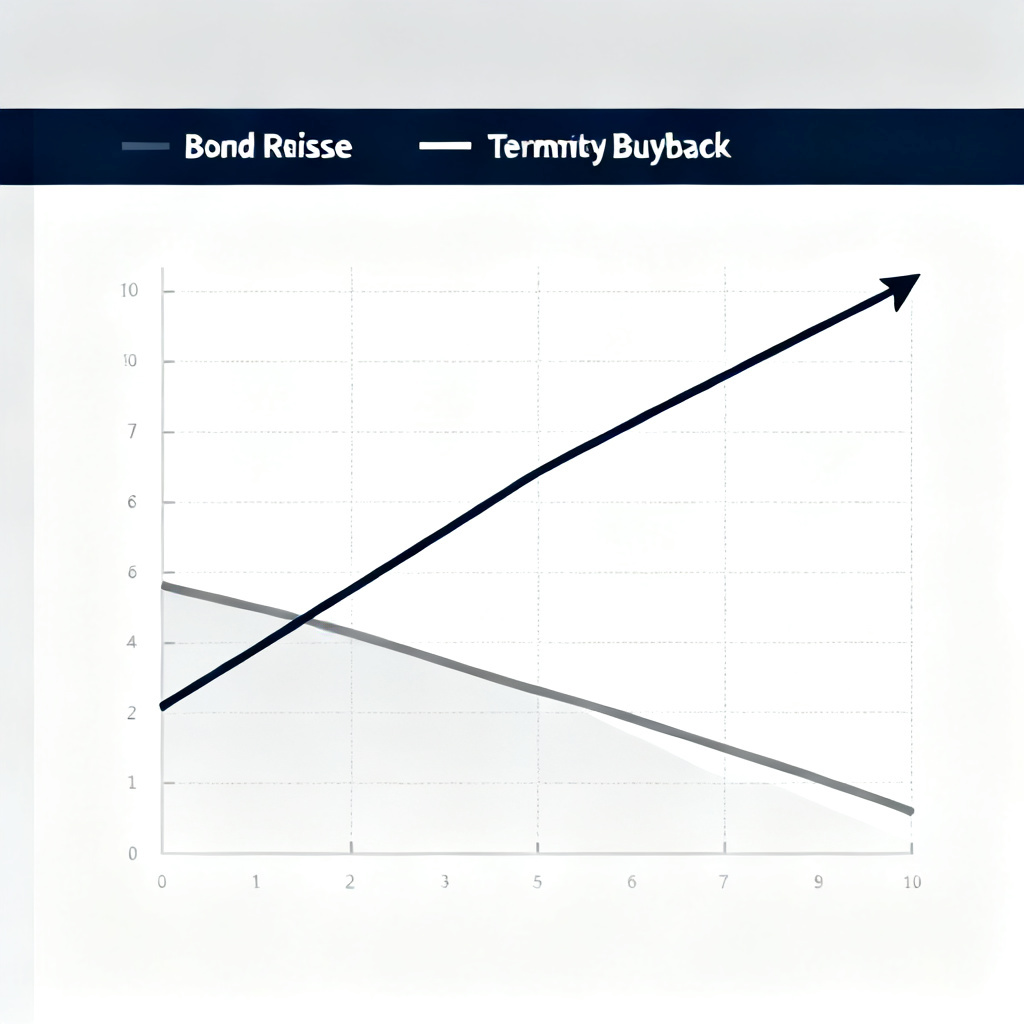
Treasury Fires a Warning Shot, and Bond Markets Shoot Back
The U.S. Treasury Department stepped up to the plate Wednesday with what was supposed to be a powerful swing for bond market stability. Instead, it whiffed. Announcing a plan to buy back up to $6 billion in longer-dated debt—triple its normal operation—the move was meant to signal strength and calm a jittery market. The reaction? A collective shrug and a further sell-off, pushing key Treasury yields to fresh multi-year highs.
So what happened? And more importantly, what does this failed intervention tell traders about the road ahead?
The "Bazooka" That Wasn't
The stage was set on August 19, when Treasury Secretary Scott Bessent promised to at least double the normal buyback size from $2 billion. The goal was two-fold: maintain liquidity in the crucial market for 10- and 20-year notes, and subtly apply downward pressure on soaring yields. By tripling it to $6 billion, Treasury technically delivered on its promise. But in a market swimming in over $40 trillion of government debt, it was a drop in the ocean.
"Hank Paulson's bazooka this is not," noted bond fund manager Mark Spindel, drawing a stark contrast to the massive, Congress-backed interventions of 2008. "And it took an act of Congress in that crisis."
The market's verdict was swift and brutal. Instead of falling, yields ripped higher. The benchmark 10-year Treasury yield punched through 4.84%, while the 30-year bond decisively breached the psychologically important 5.3% level. For a move designed to cap rates, it achieved the exact opposite.
Why the Market Just Isn't Buying It
The tepid buyback size reveals a fundamental tension in Washington. On one side, you have the Treasury, dipping its toe into direct market operations to smooth out dysfunction. On the other, you have Federal Reserve Chairman Kevin Warsh's stated philosophy of less government meddling in financial markets. The result is a half-measure that pleases no one and convinces the market of nothing.
This isn't just about one day's operation. The Treasury also signaled that future buybacks would be at least $4 billion, establishing a new, higher floor. But here's the critical context: Treasury issuance is up nearly 12% this year. The government is flooding the market with new debt to fund massive deficits while simultaneously trying to prop up prices on old debt. It's a precarious balancing act that markets are starting to see as contradictory.
As one Mizuho economist put it, the buybacks were "less than hoped for (or feared depending on your point of view)." For bulls, it was a disappointment. For bears, it was an invitation to test the Treasury's resolve even further.
The Real Forces Driving Yields Higher
To understand why a $6 billion buyback is a pebble against a tidal wave, look at the fundamentals:
- The Debt Tsunami: Publicly held debt sits at
$31.8 trillionand climbing. Supply is simply overwhelming. - Inflation & Geopolitics: Fears are stoked by tariffs, conflict in the Middle East, and a resurgent oil price kissing
$100a barrel. - Fed Overhang: With a rate decision next week, traders are fully pricing in another hike. The era of cheap money is not just over; it's being actively reversed.
The Treasury is trying to fix a structural problem with a tactical tool. It's like using a garden hose on a forest fire.
The Peril of Drawing a Line in the Sand
The most damning critique comes from market veterans who see a dangerous precedent. Stanley Druckenmiller, a legendary investor and former mentor to Secretary Bessent, laid it out bluntly in a recent op-ed: "Once markets believe Treasury is defending a price, every rise in yields becomes a test of official resolve... Governments defending prices against fundamentals always lose."
That’s the core risk here. By announcing these operations, the Treasury has implicitly set a level it doesn't want yields to cross. But without the firepower to back it up, that level becomes a target for shorts. Every basis-point increase above it is a signal that the government is losing control.
Is the Treasury prepared to quintuple the buyback size to $10 billion next time? Would that even work? As Wrightson ICAP analysts noted, such a drastic move "would be an admission that the Treasury hadn't thought through its hasty August 19 announcement in the first place."
What Traders Are Watching Now
Forget the 20-minute operation happening Thursday at 2 p.m. ET. That's a sideshow. The main events are:
- The Fed's Next Move: Can the central bank maintain its hawkish stance with the long end of the yield curve breaking out? The disconnect between Treasury's defensive posture and the Fed's restrictive one is glaring.
- The Durability of High Yields: Have
5%+long-term rates become the new normal? This reshapes the entire investment landscape, from equity valuations to corporate borrowing costs. - Treasury's Next Play: Does Wednesday's negative reaction force Bessent's hand into a more aggressive, Paulson-sized response? Or does it reveal that the Treasury's toolbox is effectively empty against these market forces?
As a University of Chicago economist succinctly stated, "Actions not words are what matter." The Treasury's action was too small. Its words now carry less weight. The market, always the ultimate judge, has rendered its verdict. The question is whether Washington is listening.