World Cup Gives June Jobs Report a 40K Kick, Says Goldman
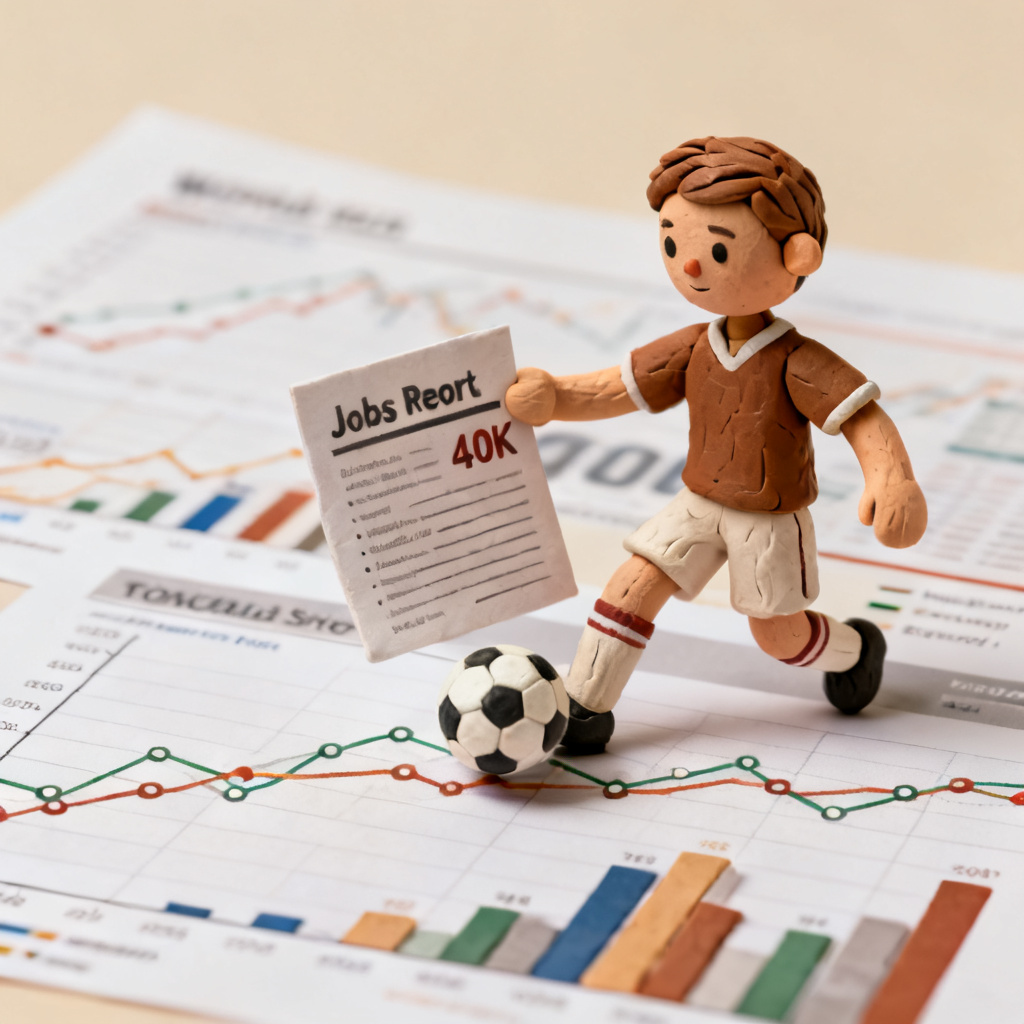
The Beautiful Game's Surprise Assist: Jobs
Forget the midfield. The real action last month might have been on the payroll sheet. While economists braced for a slowdown, a new player entered the field: the World Cup. Sharp analysis from Goldman Sachs suggests the global tournament provided a crucial boost to the U.S. labor market, potentially adding around 40,000 jobs in June. It’s a reminder that sometimes the biggest market moves come from the most unexpected corners.
Goldman's Call: A 40K World Cup Bump
The consensus is looking for a gain of 115,000 in nonfarm payrolls, a noticeable step down from May's sturdy 172,000. But Goldman’s economists, Ronnie Walker and Jessica Rindels, are eyeing a stronger print of 140,000. The difference? Their modeling points squarely at the World Cup. “Our historical analysis suggests that the World Cup could boost payroll growth by 40k in June,” they noted.
Their thesis isn't built on thin air. They're leaning on high-frequency private data from small business payroll firm Homebase. The numbers tell a compelling story: while overall hiring pace cooled in June, the 11 host cities saw a year-over-year decline of just 1.2%. Everywhere else? A steeper 3.5% drop. The signal is clear—activity in tournament cities held up better.
Drilling down, the leisure and hospitality sector showed a 9.5% surge in hiring according to Homebase. That’s your classic tournament pop—more bartenders, hotel staff, and security for the influx of fans. Goldman expects the impact to be concentrated there, plus in professional and business services (think event logistics, temp agencies) and trade and transportation.
Why This Isn't Just a Statistical Quirk
So, the World Cup added some temporary gigs. Why should a serious investor care? Because context is everything in trading this data.
First, it muddies the water for the Federal Reserve. The central bank is parsing every data point for signs the labor market is finally cracking under the weight of high interest rates. A headline number of 140,000 looks meaningfully stronger than 115,000. But if 40,000 of those are event-driven and likely transient, does it change the underlying narrative of gradual cooling? The Fed’s dilemma just got trickier.
Second, it highlights the growing importance of alternative data. Wall Street isn't just waiting for the Bureau of Labor Statistics report anymore. Firms are scraping credit card transactions, parsing satellite images of parking lots, and yes, monitoring small-business payroll software to get an edge. The Homebase data is a prime example of this new reality.
Third, there's the revision game. Goldman also points out that prior June payrolls have shown an “upward bias” on the first estimate. The initial count has been revised lower in each of the past four years. Could a World Cup-inflated number be even more prone to a downward correction later? Traders positioning for a "beat" need to factor in that risk.
Market Implications: Reading Between the Headlines
For the trading floor, this sets up a classic "good news is bad news" scenario, but with a twist.
A print near Goldman's 140,000 estimate would likely spark an initial knee-jerk sell-off in bonds, pushing yields higher on the assumption of a more resilient economy that lets the Fed stay patient. Stocks tied to consumer discretionary spending and travel might get a bid. But the savvy move will be to quickly dissect the components. Is the strength broad-based, or is it all in hospitality?
If the gains are narrowly focused in World Cup-sensitive sectors, the bond market rally could swiftly reverse. The takeaway would be that the underlying trend is still softening, and the Fed's path to rate cuts remains open—just delayed by a month of soccer mania. This could support a rotation back into rate-sensitive growth stocks.
The bigger question for investors: What happens in July? A June bump fueled by a one-time global event almost guarantees some payback. Will July's report show a corresponding hangover as those temporary positions end? That’s the kind of volatility that creates opportunity for those watching the second derivative.